
The arousal timeline problem nobody talks about
Here's the thing about desire. It doesn't sync up like a Netflix queue. One partner wakes up Saturday morning ready to move. The other needs an hour of talking, coffee, and literally any other stimulus before their body even registers the possibility of sex. Neither person is wrong. Both timelines are legitimate. But the constant negotiation of "not yet" and "come on" and "just give me a minute" creates tension that has nothing to do with attraction.
This mismatch is one of the most common relationship friction points I see in my practice. Couples spend years thinking the problem is desire itself. "I don't want them enough" or "They don't want me anymore." When really, the problem is just rhythm.
Why arousal timing matters more than you think
When your peak arousal moments don't overlap, sex starts feeling like a negotiation instead of a mutual experience. The faster person waits and worries they're being needy. The slower person feels pressured, which kills arousal even more. Eventually, both people stop initiating because the whole thing feels like setup for a letdown.
This isn't about willpower or attraction levels. It's neurochemistry. Some people's parasympathetic nervous systems activate quickly. Others need more stimulation and mental space to shift out of "managing tasks" mode into "present and open" mode. Add in hormones, stress, medications, and life stage (midlife transitions hit differently for everyone), and you've got a pretty legitimate timeline gap.
The research on couples and pleasure is clear. When one person feels they're always waiting or always rushing, sexual satisfaction tanks across the board. What's less talked about is how simple tools like a lemon clitoral vibrator can actually synchronize desire without either person feeling compromised.
How a lemon vibrator shifts the arousal conversation
A lemon vibrator changes the dynamic because it gives the faster person something to do that isn't "wait for your partner." Instead of lying there checking the time, they can start exploring their own arousal independently. The result. Both people are building pleasure simultaneously, just in different ways.
This matters because pleasure is not a zero-sum game. One person using a clitoral vibrator doesn't mean the other person is being sidelined. It means everyone gets to access what they actually need right now. The slower person can watch, participate when they're ready, or simply know their partner isn't dependent on their speed. That release of pressure actually helps the slower person relax faster.
Practical choreography for different timelines
Let's talk logistics. When you know your arousal curves are out of sync, you have options.
Start separately, come together. One partner begins with a lemon vibrator alone while the other is getting ready or taking their time. There's no shame in this. You're not abandoning each other. You're honoring your actual timelines. Once the slower partner is warmed up, you merge. Maybe they watch for a bit. Maybe they touch. Maybe they use the vibrator with you. The key is there's zero pressure to perform on anyone's schedule but their own.
Use it during penetration. If you're doing PIV (penis-in-vagina) sex, a lemon clitoral vibrator can give the person with the clitoris exactly what they need at the exact moment they need it, regardless of where their partner is in their cycle. This is wildly effective for the mismatch problem because it decouples penis arousal from clitoral arousal. Both people can finish, both people can enjoy, neither person has to sacrifice.
Extend foreplay without resentment. If one person gets aroused in ninety seconds and the other needs twenty minutes, a vibrator lets the faster person have pleasure while the slower person still gets the full warm-up they deserve. You're not cutting corners for anyone.
Create a ritual. Some couples find it helps to schedule sex intentionally when there's a big timeline mismatch. "Sunday night, after dinner" lets both people prepare mentally. The faster person isn't shocked by unexpected desire. The slower person can genuinely relax into the time. A lemon vibrator can be part of that ritual. It becomes a signal that pleasure time is here, and both people get what they need.
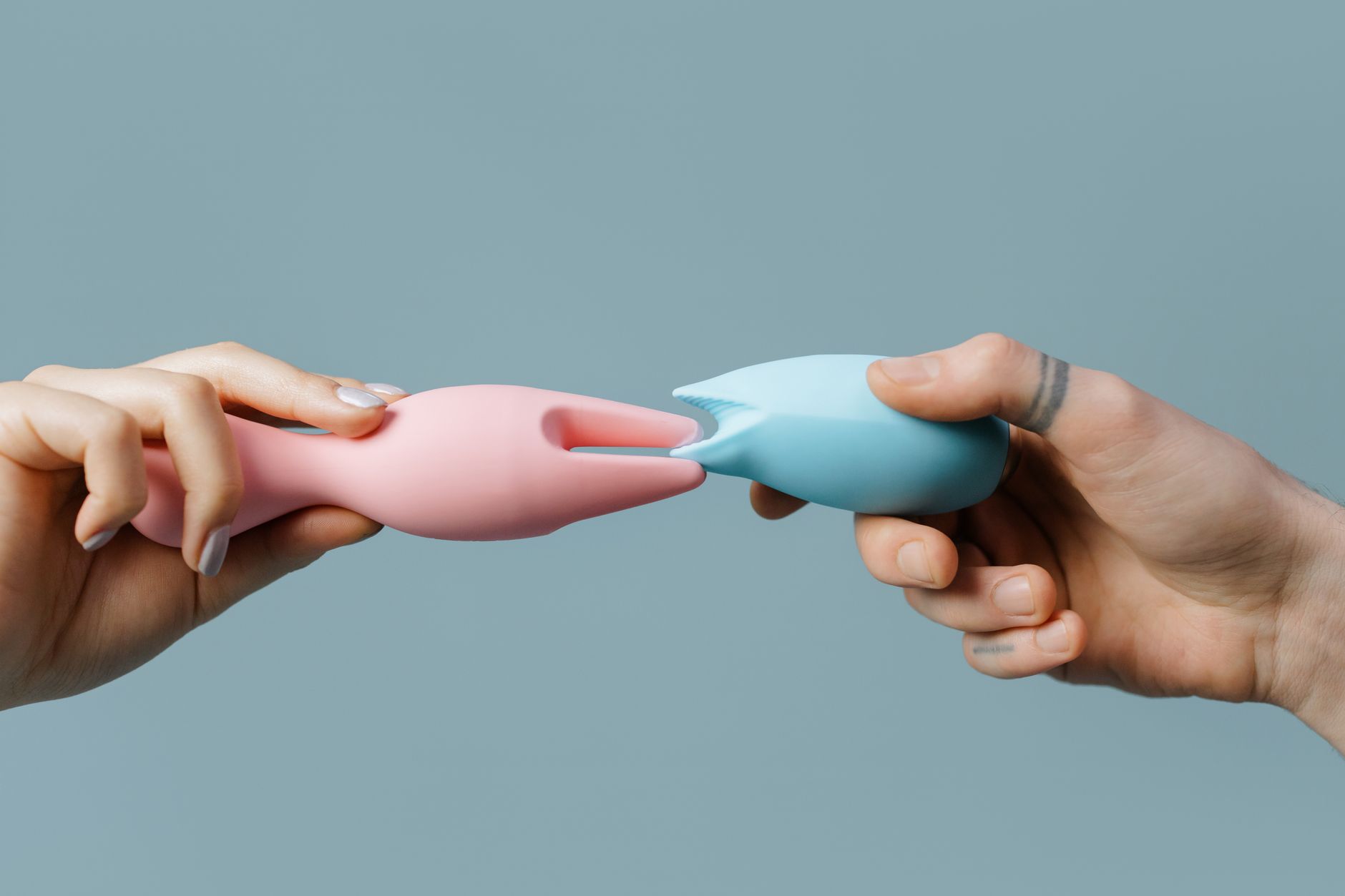
Photo by cottonbro studio on Pexels
The emotional setup that actually matters
None of this works if you're still operating from shame or resentment. Before you introduce a vibrator into the timing conversation, you need to actually talk about the timing. Not in the moment. Not during sex. Beforehand, when you're both clothed and calm.
Here's what I ask couples to discuss: "When does your desire usually start building? What do you need from me during that time? Does the way I approach you help or hinder?" These aren't accusations. They're data. You're learning how your partner's body and brain work.
Then you explain what you need too. "I get aroused quickly, and sometimes I feel rejected when you're not there yet. I need to know that's not about me." Or the reverse. "My arousal takes time, and I feel rushed, which makes it worse. I need you to know that's normal for my body."
Once you've actually named the problem, a lemon vibrator stops being a band-aid. It becomes a tool you both chose to work with, not a weapon someone whipped out in frustration.
When timing differences signal something deeper
Sometimes arousal mismatch is just timing. Sometimes it's pointing to something else. If one person's desire has completely disappeared, that's not a rhythm problem. That's a different conversation (and potentially a conversation worth having with a therapist).
But if both people want sex and both people experience pleasure, just on different schedules. This is solvable. A lemon clitoral vibrator is one of the most practical tools for that because it doesn't require your partner to change their arousal curve. It just requires honesty about what you each need.
The permission piece
Here's what I tell couples who are hesitant about bringing a vibrator into partnered sex: your pleasure isn't a threat to their pleasure. Using a vibrator doesn't mean you're rejecting your partner. It means you're taking responsibility for your own arousal instead of making your partner responsible for it. That's actually deeper intimacy, not less.
Some people worry that introducing toys means something's wrong. Actually, couples who can say "I want this, will you help me use it or watch me use it" have better sex and better relationships. Because they're communicating about what actually works instead of pretending everything is fine while building quiet resentment.
If you're in a long-term partnership and arousal timing has been the thing you can't quite solve, a lemon vibrator might be the conversation starter. Not as a replacement for intimacy. As a way to actually build it.
FAQ: Arousal Timing and Lemon Vibrators
How long should I wait for my partner to be aroused before I use a vibrator?
There's no rule. But if you notice you're consistently ready ten to twenty minutes before your partner, that's the signal. You're not waiting. You're building. A lemon vibrator lets you do that without stopping the entire experience. Some couples build together from the start. Others sync up naturally once both people are actually aroused. The point is you're not stuck in dead time.
Will using a vibrator while my partner watches make them feel inadequate?
Only if you frame it that way. If you position it as "I love being touched by you AND I want this vibration right now," that's sexy and honest. If you position it as "You're not enough," that's a different problem that a vibrator won't solve. The tool is just the tool. Your communication is what matters.
What if my partner has a much faster arousal curve than I do?
Then they use the vibrator. The slower person doesn't have to rush or perform. The faster person doesn't have to wait in a weird holding pattern. This goes both ways. A lemon clitoral vibrator works for anyone with a clitoris, regardless of their side of the timeline mismatch.
Can we use the same vibrator, or do we need separate toys?
Shared is fine if you both want it. Some couples find it hotter to trade off. Others prefer separate tools so there's no negotiation during the moment. It depends on your preferences. Just keep it clean, and if someone has a yeast infection or any kind of vulval sensitivity, don't share until that's cleared up.
Does using a vibrator together actually help couples feel more connected?
Research and clinical observation both say yes. When couples can access pleasure together instead of waiting for synchronization, desire increases overall. You're removing the friction of timing, which frees up energy for actual connection. You're also communicating about what you both want, which builds intimacy. So yes, genuinely.
What if my partner thinks using a vibrator means I don't want them?
That's a conversation for clothed, calm time. "I want you. I also want this vibration. Those things aren't in conflict." Some partners need reassurance. Some need time to adjust to the idea. Some need to try it once and realize they actually love it. But if someone is actively against it, that's a deeper conversation about control or insecurity that goes beyond the vibrator itself. That might be worth working through with a therapist.
The actual next step
If your arousal timelines have been a source of tension, you have two conversations to have. First, the one about timing and what you each actually need. Second, the one about tools that might help. A lemon clitoral vibrator isn't magic. It's just a more honest way to let both people be where they actually are, instead of one person waiting and the other person feeling rushed.
Your pleasure timelines don't have to match. They just have to coexist without resentment. That's the actual shift.