What happens to your body when trust breaks
Infidelity doesn't just damage your relationship with your partner. It fractures your relationship with your own body. Suddenly, pleasure feels contaminated. Your nervous system, which was calibrated to feel safe with this person, is now in a state of persistent doubt. Your skin remembers touch differently. Your arousal, which was maybe straightforward before, becomes a complicated negotiation between desire and hypervigilance.
This is not dramatic. This is neurobiology. When betrayal happens, your threat-detection system stays switched on. And when your threat system is running, pleasure gets throttled.
Here's what makes this different from other pleasure disconnections. It's not that your body stopped working. It's that your body is doing exactly what it's supposed to do. It's protecting you. And that protection, while necessary, can make solo pleasure feel impossible to access because the shame and doubt aren't just about the relationship. They're about you.
Why solo pleasure feels like a betrayal
After infidelity, many people report that touching themselves feels wrong in new ways. Not because masturbation is inherently shameful, but because pleasure itself has become entangled with the betrayal. If your partner betrayed you during sex, or if you found out during a sexual moment, your body now associates arousal with threat.
Others describe a different disconnect. Pleasure feels selfish. You're supposed to be processing the hurt, not exploring your own body. Taking time for your own pleasure can feel like you're abandoning the work of rebuilding trust or proving you're "over it." Neither is true. In fact, the opposite is.
Reclaiming your relationship with pleasure is not a distraction from healing. It's essential to it. When you can feel good in your body again, independent of anyone else's validation, you're rebuilding something core. You're proving to yourself that you belong to yourself first.
The neuroscience of reclaiming sensation
Your body has two nervous system states that matter here. The sympathetic system is your threat detector, your "fight or flight." The parasympathetic is your "rest and digest," where pleasure lives. After infidelity, your sympathetic system has been on high alert. Shifting back to parasympathetic activation requires a specific kind of safety signal.
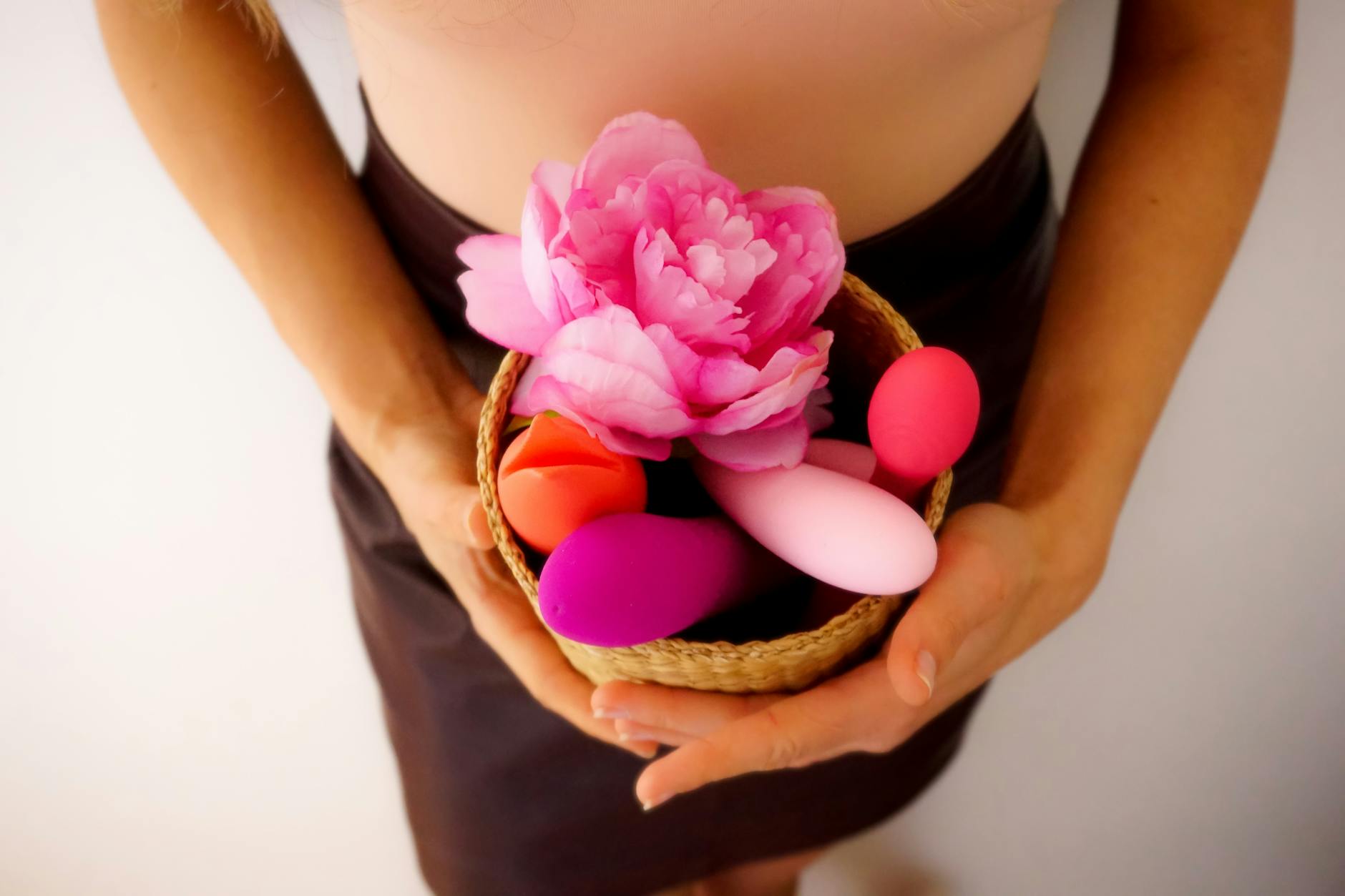
This is where a lemon clitoral vibrator becomes useful. Not as a tool to force pleasure, but as a tool to create predictable, gentle sensation that your body controls completely. Unlike a partner, a vibrator offers zero ambiguity. It does exactly what you tell it to do. No surprises. No second-guessing. No moment where trust gets shattered in the middle of something intimate.
The Lemon Vibe's lemon adult toys, particularly the air-suction designs, work well here because they create a different kind of stimulation than vibration alone. The sensation is more focused, less invasive. You can start at the lowest setting and build at your own pace. This graduated approach allows your nervous system to slowly recognize that sensation equals safety, not threat.
Starting the conversation with yourself
Before you touch anything, you need to have a conversation with yourself about what pleasure means now. This sounds abstract, but it's practical. Are you trying to orgasm? Are you trying to prove you're "fine"? Are you trying to reclaim your body as yours alone? These are different goals, and they require different approaches.
For many people in the early stages after infidelity, the goal isn't orgasm. It's sensation without shame. It's touching your own body and having that feel neutral or good instead of contaminated. This is slower. It's also more important.
Start with touch that has nothing to do with your genitals. Your shoulders, your collarbones, the inside of your forearm. The point is to rebuild the association between your touch and safety. Your hands have become an extension of self-care, not someone else's expectations.
How to approach external pleasure
When you're ready for genital touch, the approach matters. Here's what I recommend:
Set a boundary around time. Give yourself 15-20 minutes, not more. This isn't about rushing. It's about creating a contained experience. Your nervous system needs to know there's an endpoint.
Choose a setting where you control all variables. Alone, locked door, phone off. You're teaching your body that this space is predictable and yours only.
Start with the lemon vibrator on its lowest setting. Don't go for the intensity. Go for the sensation. Let your body remember what pleasure feels like when it's completely in your control.
If shame shows up, pause. You don't push through it. You notice it. You breathe. You might journal about it after. But during, you're gathering data. Your body is telling you where it still feels unsafe. That information is gold.
Orgasm is not the goal. This cannot be overstated. If an orgasm happens, great. If it doesn't, that's also information. You're learning what pleasure is available to you now, not what it should be.
When pleasure triggers panic
Some people find that arousal itself becomes a panic trigger after infidelity. Your heart races, your body goes numb, or you suddenly feel hyperaware of what happened. This is a trauma response, not a failure.
If this is you, slow down even more. Some people benefit from starting with sensation that's not sexual at all. Running water over your skin. Weighted blankets. Holding ice. These activate your parasympathetic system without the charged territory of sexuality.
You might also need to work with a trauma-informed therapist in parallel. Pleasure reclamation after infidelity is not always something you do alone. Sometimes you need professional support to help your nervous system recognize that arousal and betrayal are no longer linked.
The partner conversation
If you're in a relationship that's working toward repair, your partner needs to understand what reclaiming solo pleasure means. It does not mean you're pulling away. It means you're rebuilding trust with yourself so you can eventually rebuild it with them.
Some people find it helpful to tell their partner they're using a lemon clitoral vibrator for self-healing. Others prefer to keep it private. Both are valid. The key is that this conversation, if you have it, is about your autonomy and your healing. It's not an invitation for your partner to fix it or be involved.
If your partner responds with jealousy or tries to monitor or control this, that's important information. Trust repair requires your partner to respect your boundaries, including your body.
When to know you're ready to move forward
You'll know you're ready when pleasure stops feeling like a negotiation with yourself. When you can touch your body and feel neutral or good without immediately spiraling into doubt. When the lemon adult toys feel like an extension of self-care instead of a band-aid on something broken.
This is not a linear process. You might have weeks where it feels fine, then a trigger takes you back three steps. That's normal. Healing isn't about moving forward in a straight line. It's about building a wider window of tolerance so those setbacks don't feel catastrophic.
For many people, the act of reclaiming solo pleasure becomes the foundation for rebuilding partnered pleasure. When you've proven to your body that you can feel good again, your body starts to trust again. And that trust, built from the ground up, is harder to shake.
FAQ: Pleasure and Healing After Betrayal
What if orgasms feel physically impossible right now?
Orgasm is a neurological response that requires safety. If your threat detection system is still running high, your body might not have access to that response yet. This is temporary. As you practice and your nervous system recognizes the pattern of safe sensation, orgasm usually becomes available again. For now, focus on sensation without outcome. The orgasm will follow.
Is using a vibrator after infidelity just avoidance?
No. Reclaiming your relationship with your own body is active healing. It's you saying "my pleasure is mine, my body is mine, my healing is mine." That's the opposite of avoidance. That's ownership. The work of rebuilding trust with your partner happens separately, usually with professional support.
Should I tell my partner I'm using a lemon vibrator for this?
That depends on your relationship and what feels safe to you. There's no requirement to disclose. Your body is yours. That said, if you're in a relationship that's doing the work of repair, honesty often helps. If telling your partner creates more conflict, that's information about whether the repair work is actually happening.
How long does it usually take to reconnect with pleasure after infidelity?
This varies widely. Some people regain solo pleasure within weeks. Others take months. A lot depends on how your nervous system processes betrayal, whether you're getting professional support, and the status of the relationship itself. Be patient with this timeline. Your body is not broken. It's recovering.
Can partnered pleasure come back after infidelity?
Yes. But it usually requires that you first rebuild pleasure solo, then rebuild it with your partner through careful, consensual steps. Jumping back into sex before you've done the internal work often backfires because your nervous system hasn't healed yet. Solo pleasure with tools like lemon clitoral vibrators is often the bridge.
What if using a vibrator makes me feel more alone?
That's worth exploring, but probably with a therapist rather than alone. Sometimes that feeling is just grief. Infidelity is a loss, and pleasure reclamation can bring that loss into focus. Other times it's shame. Both are workable. Naming which one it is will help you move through it.
The work continues
Healing after infidelity is not a solo project. Pleasure reclamation is part of it, but so is processing the betrayal, deciding whether the relationship can be repaired, and rebuilding your sense of safety in the world. A lemon vibrator is a tool, not a cure. But it's a powerful tool for reconnecting with the most fundamental form of self-care. Your body. Your pleasure. Your choice.