Let's start with the thing nobody says out loud
When your partner wants sex and you don't, the pressure is real. You're not broken. You're not withholding. You're probably just tired, distracted, or genuinely uninterested in that specific moment. But here's the part that gets confusing: you're spending so much mental energy managing your partner's desire that you've lost touch with your own.
That's the actual problem.
Mismatched desire is one of the most common things I see in couples therapy, and it almost always gets framed wrong. People assume it's about frequency. It's not. It's about desire feeling like an external demand instead of something that lives inside you.
The difference between responsive and spontaneous desire
Most people think there are two types of desire: high and low. That's unhelpful. What actually matters is the difference between spontaneous desire (the kind that shows up uninvited) and responsive desire (the kind that appears once you're already in motion).
Spontaneous desire is the lightning bolt. It hits without warning. Responsive desire is what happens when you're touched, kissed, or engaged with your body in a way that wakes something up. Neither is better. They're just different.
Here's what matters: if your partner has spontaneous desire and you have responsive desire, and they're initiating based on their own rhythm, you're never going to feel like you're catching up. You'll feel chased. You'll feel guilty. You'll start saying yes to sex you don't actually want, which trains both of you to believe that your desire doesn't matter.
Then sex becomes a thing you do for someone else instead of a thing you do for yourself.
Why solo pleasure changes everything
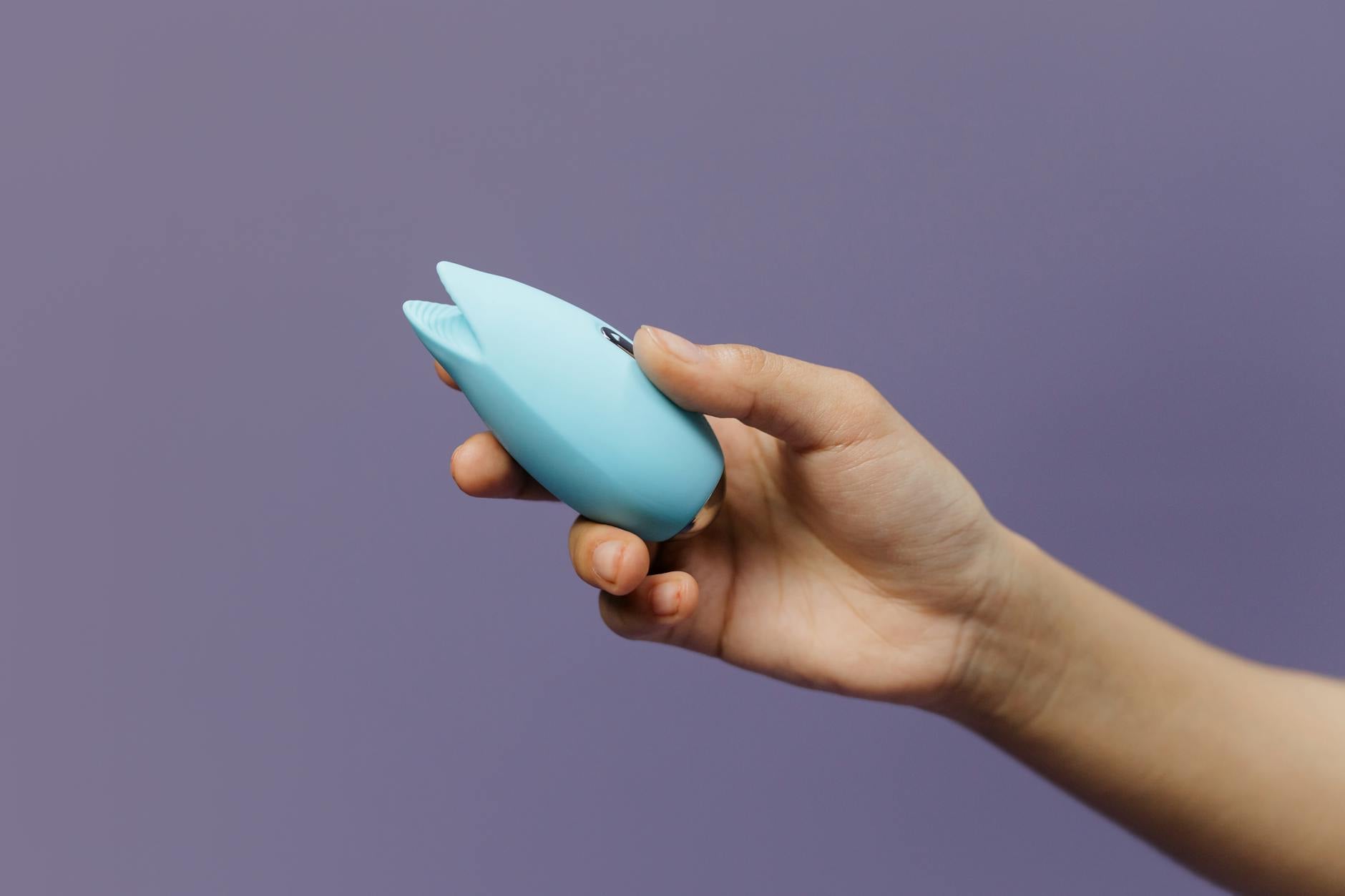
This is where a lemon vibrator shifts the game.
When you spend time with your own body, alone, without performance pressure or someone else's timeline, something radical happens. Your responsive desire actually gets activated on your terms. You learn what makes your body hum. You remember what wanting feels like when it's not tangled up with obligation.
This isn't about choosing solo pleasure over partnered sex. It's about building a relationship with your own desire so strong that when your partner initiates, you're not managing their expectations. You're actually deciding whether you want to join them.
The difference is everything.

Photo by cottonbro studio on Pexels
How to actually use this time
Three guidelines that actually work:
1. Schedule it like it matters, because it does. Don't wait for spare time to magically appear. Put it on your calendar. Thirty minutes on Tuesday. Thursday evening. Whatever works. The ritual matters almost as much as the pleasure. You're signaling to your own nervous system that your body deserves attention.
2. Start slow and curious, not goal-focused. The moment you decide you need to have an orgasm, it becomes another thing on your to-do list. Instead, use the time to notice what your body enjoys. How does a lemon clitoral vibrator feel on different settings? Do you like building for 10 minutes or moving fast? Do you prefer a pattern or steady suction? These aren't trivial questions. This is you learning your own language.
3. Let it inform how you communicate with your partner. Once you know what you actually like, say it. Not as a complaint about what they're doing wrong. As information. "I'm realizing I need more time to warm up," or "This pattern feels really good to me." Watch what happens when your partner learns that you know your own body. Suddenly it's not about convincing you to want something. It's about figuring out how your desire and theirs fit together.
The conversation you actually need to have
Mismatched desire isn't solved by sex more often or scheduling it better. It's solved by separating two things that usually get tangled:
First conversation: "My body responds better with solo time first. That's not about you. That's about me knowing myself better."
Second conversation: "Once I know what I want, here's how you can help activate that for me."
See the difference? The first one is about your body and your baseline. The second one is about partnership and connection. You can't have the second conversation until you've done the work of the first one.
A lemon vibrator is the tool that makes the first conversation possible. It's not a substitute for partnered sex. It's the foundation that makes partnered sex feel like a choice instead of a negotiation.
What actually shifts in the relationship
Once you reconnect with your own desire, three things happen almost automatically:
You stop feeling resentful about your partner's higher drive. That resentment usually comes from feeling like you're always on the defensive, always managing their expectations. Once you have your own rhythm, their desire stops feeling like pressure.
Your partner stops equating rejection with rejection of them. When you say no to sex, they're not hearing "I don't want you." They're hearing "I don't want sex right now," which is actually information they can work with instead of a wound.
You actually want sex more often. This seems counterintuitive, but it's real. When sex is something you choose instead of something you accommodate, and when you've spent time learning what actually turns you on, partnered sex becomes more interesting. You're not just receiving pleasure. You're sharing something you actually want.
That changes the whole dynamic.
The role of a clitoral vibrator in responsive desire
Clitoral stimulation is particularly useful for responsive desire because it's direct and efficient. You don't need to be guessing at what will work. A lemon vibrator gives you consistent, focused stimulation that you can control entirely. Start at a lower setting, explore the patterns, find your rhythm.
Many people with responsive desire find that external clitoral stimulation is exactly what their body needs to move from neutral into interested. It's not that their desire was absent. It was just waiting for the right trigger.
This matters because responsive desire isn't broken desire. It's a totally normal pattern. But our culture treats spontaneous desire like the baseline, which means people with responsive desire feel like something is wrong with them. It's not. You just need different conditions to access what's already there.
When to have the conversation with your partner
Not during sex. Not right after. Pick a calm moment, no phones, no kids yelling for snacks. Say something like this:
"I've been noticing that our desire doesn't sync up, and I'm realizing that might be because I have responsive desire. I'm not interested in having sex every time you are, and that's not about you. It's about how my body works. I'm going to spend some time reconnecting with what I actually want, and I think that will help us both. I might ask for more solo time, and that's actually going to help me be more present when we do connect."
Then listen. Your partner might worry this means less sex, or less connection. Address that directly. "I actually think I'll want partnered sex more often once I stop resenting the pressure to be ready all the time. And you'll know I'm actually choosing you instead of managing your expectations."
That's a conversation worth having.
People also ask
Q: Is it normal for one partner to want sex more often?
Completely normal. Research suggests that roughly 60-70% of long-term couples have some degree of mismatch in desire. It's not a relationship problem. It's a normal pattern. The problem only emerges when one person's higher desire starts controlling the dynamic, or when the person with lower desire feels obligated instead of willing.
Q: Will using a lemon vibrator alone make me want sex with my partner more?
Not automatically. But reconnecting with your own desire, learning what you like, and building a framework where sex feels like your choice instead of an obligation often naturally increases both desire and satisfaction. The vibrator is the tool that helps you do that work.
Q: How do I tell my partner I'm using a vibrator without it making things weird?
Direct and matter-of-fact works best. "I'm spending some solo time exploring what my body likes. This helps me feel more present when we're together." Most partners actually feel relieved by this. It takes pressure off them to somehow magically know what turns you on.
Q: Can we use a lemon vibrator together if I have responsive desire?
Absolutely. Solo time is about learning your own pattern. Once you know it, partnered use is a natural next step. Your partner can use the vibrator on you, which often activates responsive desire faster than partnered touch alone. Or you can use it while you're intimate together. The key is that you're leading with what you know actually works for your body.
Q: What if my partner feels threatened by solo pleasure?
That's worth addressing directly. "I'm not choosing this instead of you. I'm doing this so that partnered sex feels like something I want instead of something I'm managing." If they remain defensive, that's a sign that the desire mismatch might be pointing toward a larger pattern of control or connection that's worth exploring in couples therapy.
Q: Does responsive desire mean I don't love my partner?
No. Responsive desire is a pattern of how your body accesses arousal. It has nothing to do with how you feel about your partner. You can be deeply in love and still have a body that needs to be engaged, touched, or stimulated in order to access desire. Those are separate things.
The actual outcome
When you stop equating your partner's initiation with a demand you have to manage, something shifts in the relationship. Sex stops being about frequency and starts being about quality and genuine choice. Your partner gets to initiate without guilt. You get to say yes or no from a place of actual desire instead of obligation.
A lemon vibrator is the tool that makes that possible. It's how you build a relationship with your own body strong enough that you stop managing someone else's. And once you have that, partnered sex becomes genuinely interesting again. Not because you're doing it more often. Because you're actually choosing it.
That's when things get good.