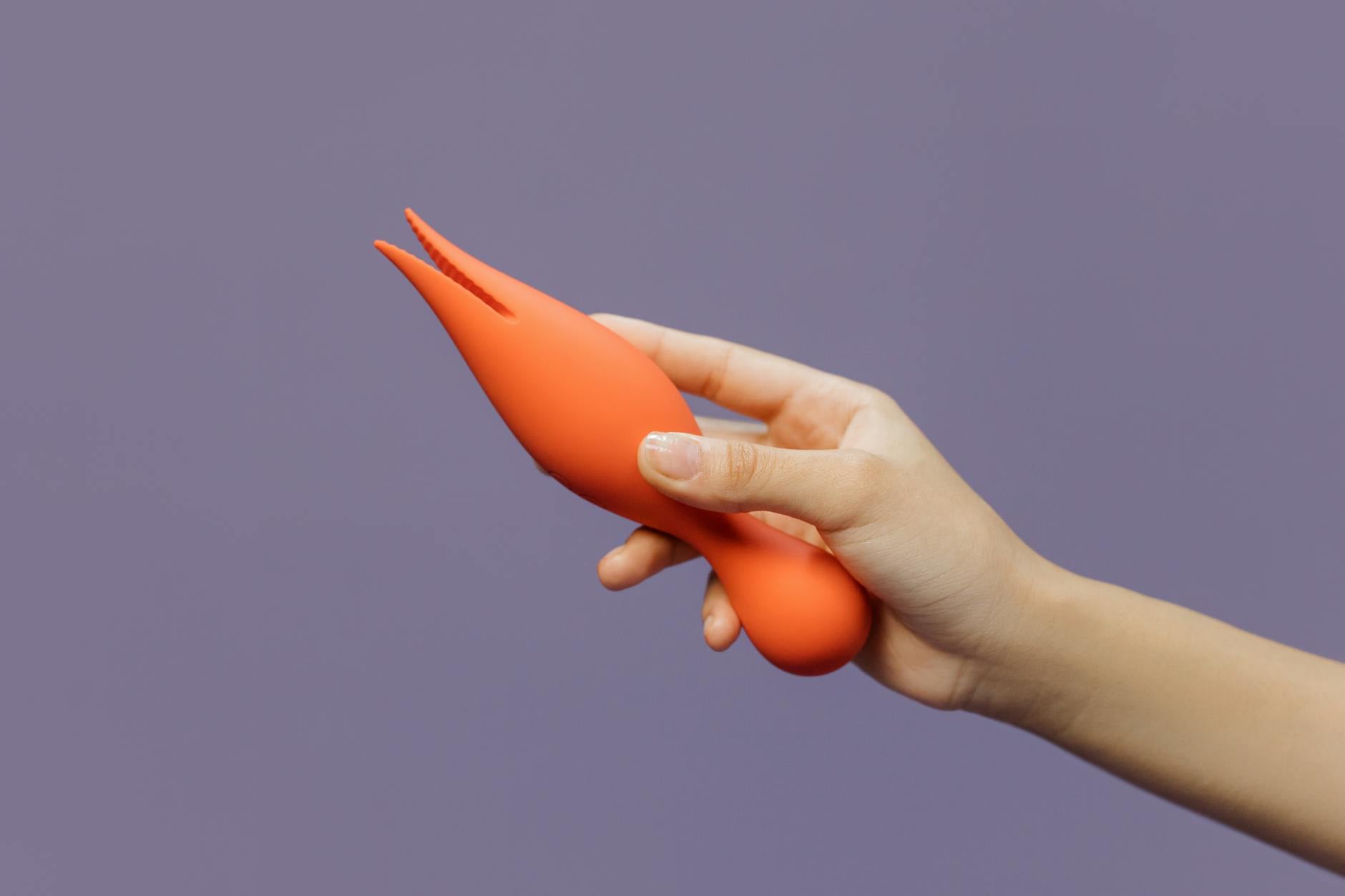
How to use a lemon vibrator for rebuilding pleasure after stopping birth control
Coming off hormonal contraception rewires your arousal, sensitivity, and desire in ways nobody warns you about. Here's what's actually happening and how to reconnect with what feels good.
You know how people always talk about what hormonal birth control does to your body? The mood swings, the weight stuff, the migraine risk. What they almost never mention is what it does to pleasure. And then what happens when you stop taking it.
The truth is, birth control fundamentally changes how your brain and body respond to arousal. It suppresses natural hormone fluctuation, which affects desire, sensation, arousal speed, lubrication, and how intense orgasms feel. Then you quit, and your body enters this weird recalibration phase that can last weeks or months. That's not broken. That's hormones doing their job again after being on pause.
But the recalibration period is confusing, and a lot of people think something's wrong when actually something's just... restarting. That's where understanding the biology, and having the right tools, makes a real difference.
Hormonal contraceptives work by flattening your natural hormone cycle. Your estrogen and testosterone stop fluctuating monthly. That has huge effects on sex.
First, consistent synthetic hormones suppress your body's natural testosterone production. Testosterone isn't just about penis-havers. People with vulvas produce it too, and it's a major driver of sexual desire. Less testosterone often means lower baseline desire, longer time to become aroused, and sometimes weaker orgasms.
Second, the pill changes vaginal lubrication. Estrogen affects tissue thickness and natural moisture. Many people on hormonal birth control report drier vaginal tissue and needing external lubricant where they didn't before.
Third, birth control can dull sensation sensitivity. Some people describe it like watching pleasure through a thin veil. It's still there, but muted. This is partly hormonal and partly psychological. Your brain knows arousal patterns are less variable, so it's less engaged.
When you stop taking birth control, all of that reverses. But it doesn't reverse overnight, and it doesn't reverse smoothly. Your body is literally remembering how to produce its own hormones again.
Different people experience different timelines, but here's roughly what to expect.
Weeks 1-2: Your body flushes out synthetic hormones. Some people feel relief immediately. Others feel chaotic. Energy levels might spike or crash. Mood can swing. Anxiety might increase or decrease depending on how the birth control was affecting you.
Weeks 2-6: Your natural hormone cycle starts to rebuild. This is when desire and sensation can feel wildly inconsistent. Some days you feel like yourself; other days you feel numb. Libido can jump around. Lubrication becomes less predictable.
Weeks 6-12: Your body settles into a more stable pattern. Hormone levels normalize. Desire becomes more consistent. You start to recognize your natural cycle again. Sensation often feels sharper, more present. Orgasms might feel different. stronger and more localized for some people, more spread out for others.
3+ months: For most people, pleasure feels recognizable and stable again. But it might not feel identical to before you started birth control. That's normal. Your body has changed, your sexuality has evolved, and your baseline might genuinely be different.
The key thing: if pleasure feels weird or missing during weeks 2-6, you're not broken. You're in the recalibration zone. The answer isn't to panic. It's to work with your body, not against it.
When hormones are recalibrating and sensation is unpredictable, you need a toy that's responsive and gentle but also reliable. Clitoral vibrators like the Lem work because suction stimulation mimics the building-block sensation that your body needs right now.
Here's why that matters: after birth control, your arousal pathway is re-establishing itself. Your nervous system is remembering what pleasure feels like. Suction toys meet you halfway. They're not relying on friction, which can feel too intense on sensitive tissue. They're using pneumatic pressure to activate nerve endings. That's a different kind of signal than vibration alone, and honestly, it's often easier for a recalibrating body to respond to.
Lemon clitoral vibrators are also intuitive. No complicated patterns, no internal components to worry about if you're not in that headspace yet. Just clear, direct stimulation that you can control completely.
Start with expectations set low. Seriously. The goal right now isn't an orgasm. It's data. You're learning what your body is feeling, where sensation is present, where it's still waking up. That might sound unsexy, but knowing what you want is way more useful than forcing an outcome.
Warm up longer than you think you need. When you were on birth control, arousal might have been slower. Paradoxically, after you stop, arousal takes a different kind of time. It's not necessarily slower, but it's less predictable. Budget 20-30 minutes. Use that time to actually be present, not to rush toward a finish line.
Use water-based lubricant, even if you don't think you need it. Your natural lubrication is normalizing right now. It's not deficient, but it's inconsistent. External lubricant isn't a sign something's wrong. It's a tool that makes sensation clearer. Use it anyway.
Start on a low pattern and stay there. You're not looking for novelty here. You're looking for consistency. Pick pattern 1 or 2 on your lemon vibrator and spend time there. Notice what you feel. Let your nervous system recognize the sensation. Intensity can come later, once you're stable.
Pay attention to your arousal curve. One thing that changes post-pill is how your arousal builds. Some people find it climbs faster than before. Others find they're more in control, less at the mercy of a hormone surge. Track what happens over a few weeks. Your next solo session or time with a partner will inform the one after it.
If orgasm comes, great. If it doesn't, still great. Right now, pressure to come will only add friction (pun intended) to what your body's trying to do. You're recalibrating, not performing.
Here's the honest part that actually goes against the "pills ruin everything" narrative. Some people report that their pleasure is actually richer, more varied, and more intense once they quit birth control. Not immediately. But after the recalibration phase.
Why? Because your natural hormone cycle is back. That monthly ebb and flow of estrogen and testosterone? It creates variation in desire, arousal speed, and orgasm intensity. Many people find that variation is actually more interesting than the flatlined pleasure of hormonal birth control.
Some people also find that desire feels more authentically theirs now. Birth control can create a disconnect where you're not sure if you actually want sex or if the pill is just suppressing the part of your brain that cares. Once you're off, that ambiguity clears.
Your body might also have shifted in sensitivity. If your clitoris was duller on the pill, the heightened sensation post-pill can feel like an upgrade. Or if you were hypersensitive, the slight decrease as things normalize might actually feel better.
The point: after the transition, pleasure often isn't just "back." It's different. Sometimes better. Sometimes just different. All of those are normal.
Most people experience the timeline I described above. Some don't. If you're 3+ months post-pill and pleasure still feels numb or absent, a few things are worth exploring.
First, check in with your hormones. A doctor can test your testosterone levels. If they're still low, sometimes a short testosterone cream can help reset things faster. It's not as dramatic as it sounds. Just a little boost to help your body remember.
Second, consider whether birth control was masking a deeper issue. Some people use hormonal contraceptives to manage anxiety or period pain, and those things often come back when you quit. If that's happening, pleasure can take a backseat to handling the physical and emotional stuff. That's not a pleasure problem. It's a bigger-picture health problem that needs attention.
Third, your nervous system might just need more time. Some bodies take 6 months to fully recalibrate. That's uncommon but real. In that case, consistent exploration with a lemon vibrator, without pressure to achieve anything specific, is actually the best medicine. Your body responds to safety and consistency, not urgency.
If you're partnered, the recalibration after stopping birth control affects both of you. Maybe your desire feels different. Maybe your arousal timing has shifted. Maybe you want different kinds of touch now. That's information, and it deserves a conversation.
The trap is framing it as a problem. "I'm less interested in sex" or "I can't orgasm the same way" sounds like something's broken. But "My body is recalibrating, and I'm learning what feels good right now" is a completely different conversation.
Using a lemon vibrator with a partner also gives you something concrete to explore together. Instead of trying to figure out what's changed in the dark, you're both participating in something new. That takes pressure off penetration or whatever your usual script was. It's a reset button.
How long does it take for pleasure to feel normal after stopping birth control?
Most people hit a stable baseline around 8-12 weeks. Full recalibration, where pleasure feels rich and varied, often takes 3-6 months. But everyone's timeline is different. Your body isn't on a schedule.
Is low desire after quitting birth control permanent?
No. Low desire during the first few weeks is normal as your body adjusts. If it persists beyond 3 months, that's worth investigating with a doctor. It could be hormonal, but it could also be relationship stuff, stress, or something totally unrelated to the pill.
Can I use a lemon vibrator if I'm still figuring out my sensitivity?
Absolutely. That's actually the best time. A clitoral vibrator lets you explore sensation without commitment or pressure. Start low, notice what you feel, and adjust from there.
Should I tell my partner I'm using a vibrator during this transition?
That's your call. But transparency tends to make things easier. If your partner understands that you're recalibrating and that a vibrator is part of that process, they're less likely to take any changes personally.
What if I feel numb even with a vibrator?
Numbness in the first 4-6 weeks is normal. If it persists beyond that, check in with a doctor. It could be low hormone levels, but it could also be medication side effects, stress, or other factors that need professional attention.
Is pleasure after birth control different for everyone?
Completely different. Some people feel more pleasure post-pill. Some feel less. Some feel the same but different. There's no standard, so don't compare your experience to anyone else's.
Stopping birth control rewires arousal. That's not dramatic or broken. It's just biology. You're not damaged. You're not less sexual. Your body is remembering how to produce its own hormones, and that takes time.
Using a lemon vibrator during this phase isn't about forcing pleasure or performing. It's about giving your body clear, consistent input while it's recalibrating. Low-pressure exploration, patient attention, and the right tool make the transition feel less chaotic and more like discovery.
Your pleasure after birth control might look different than it did before. That's actually worth celebrating. You're learning yourself again, and that's always interesting.
If you want support navigating this transition—whether that's hormone questions, relationship stuff, or just needing to talk to someone who gets it—I'm here. Reach out anytime.